Driving Progress Toward a Net Zero Future
At Dynamic FM, sustainability isn’t just a box-ticking exercise — it’s embedded in everything we do. From the way we design and deliver projects, to how we manage our supply chain and support our local communities, we’re committed to playing our part in the global transition to a low-carbon economy.
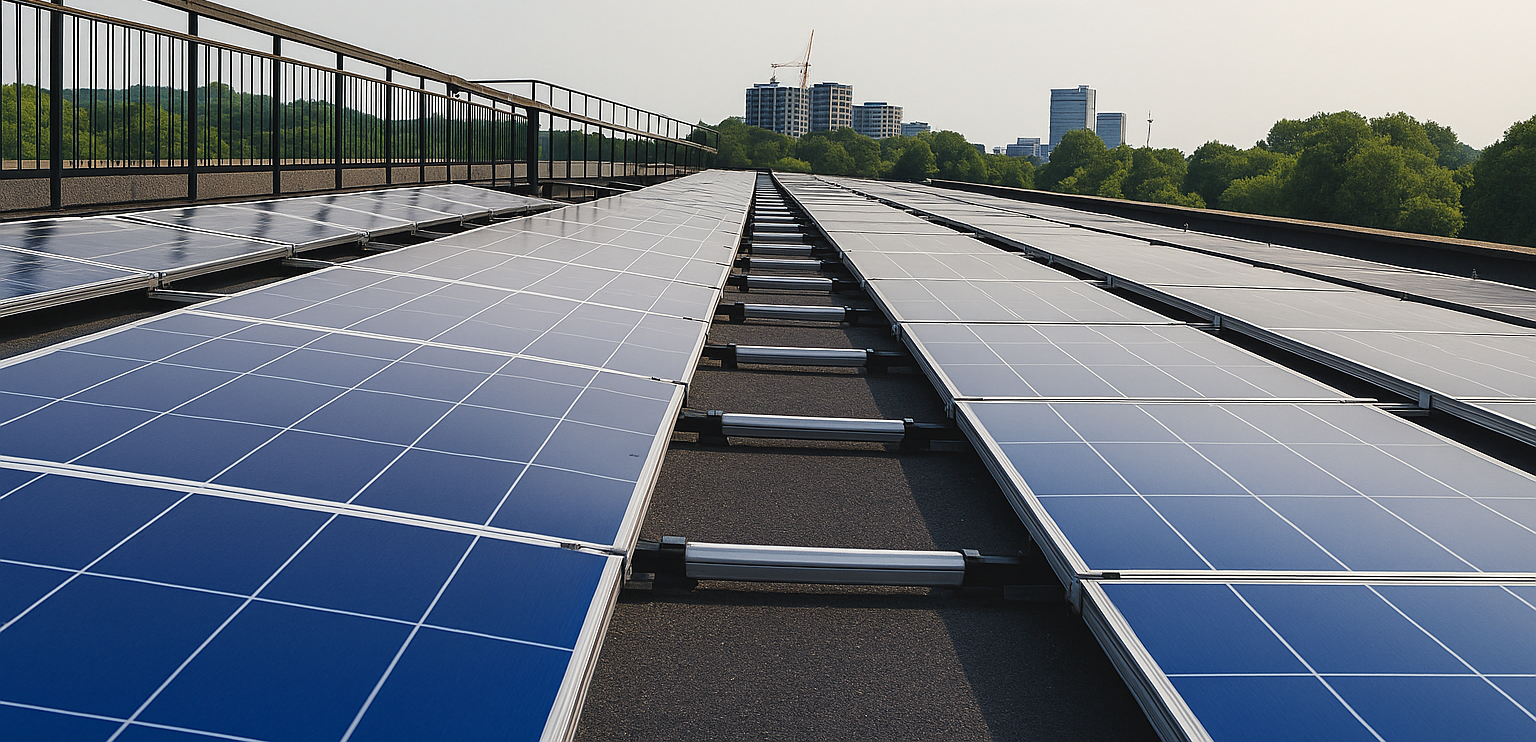
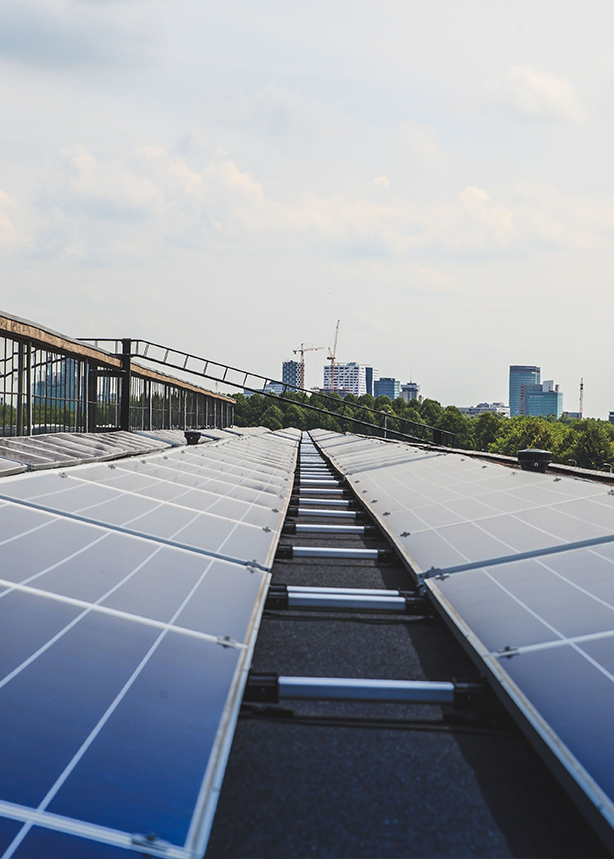
Ever since 2012 we have been at the forefront of delivering energy solutions based on green technologies, both in the domestic and commercial sectors, from solar PV to ground and air source heat pumps.
Since 2020 we have worked with leading climate and sustainability consultancy Climate Partner to independently audit our operations, processes and carbon emissions, and have been climate neutral since then by offsetting 110% of our emissions year by year.
Our Commitment
- Net Zero by 2035: We’re working to become a net zero company by 2035 — a full 15 years ahead of the UK’s national target.
- Annually Audited Carbon Reporting: Our emissions are independently calculated and verified each year by ClimatePartner, providing a transparent and credible view of our environmental performance.
- 110% Carbon Offsetting: Through our partnership with Climate Partner, we offset more than we emit — 110% of our carbon footprint is balanced through verified climate action projects.
- Collaborative Engagement: Working with our partners to achieve lasting change and demonstrable progress in operational sustainability.
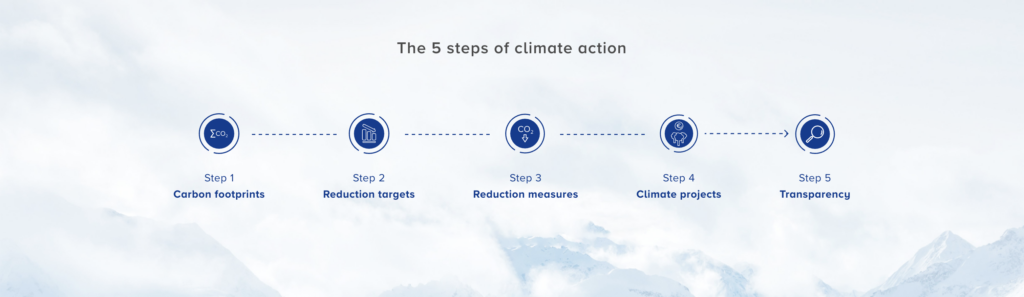
Step 1: Corporate Carbon Footprint Report
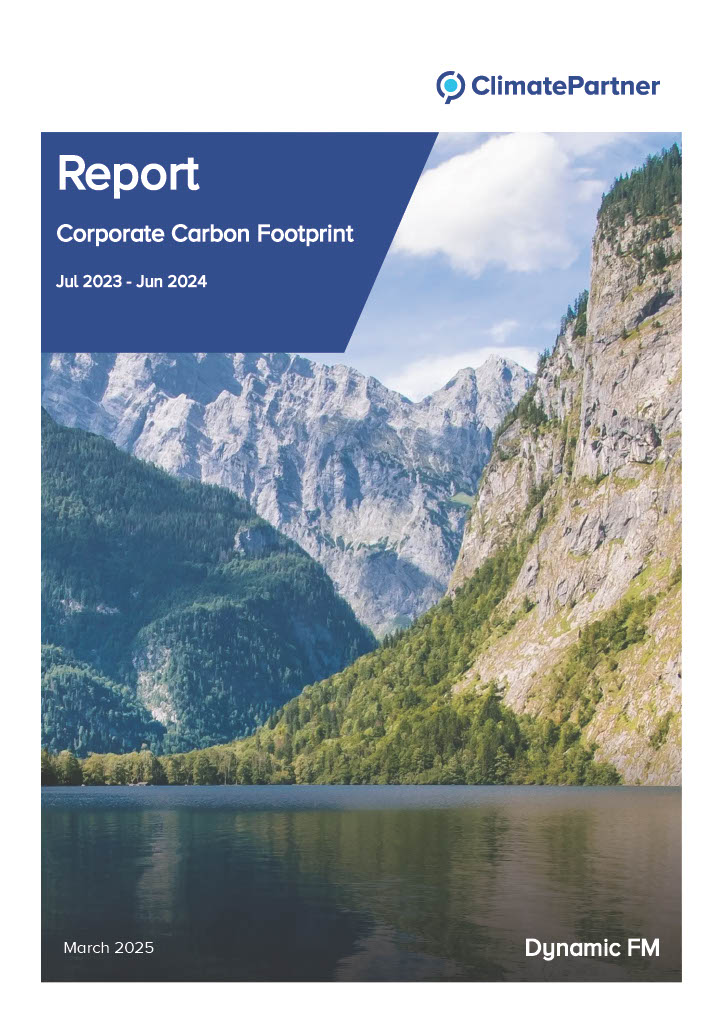
The corporate carbon footprint (CCF) is the starting point for climate action. The CCF gives you clear insights into a company’s greenhouse gas emissions.
Included in the carbon footprint
Total emissions for 2023 – 2024:
193,291 kg CO2
Step 2: Set Reduction Targets
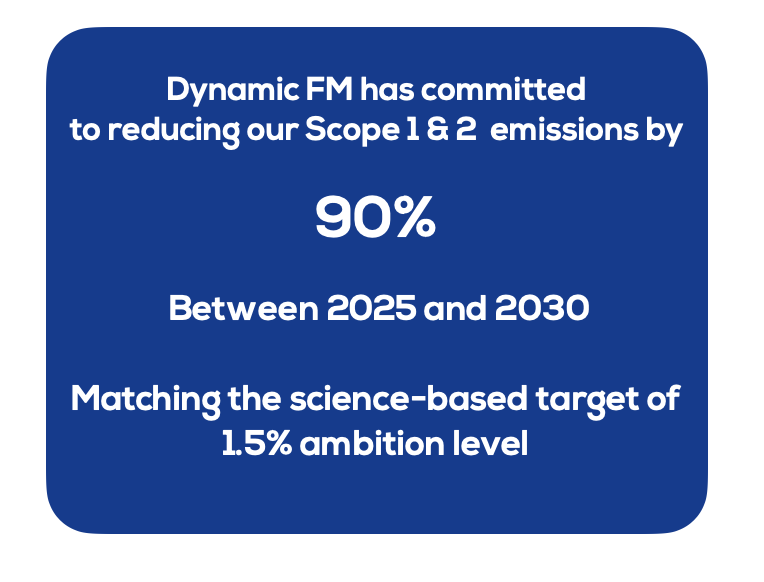
Reduction targets are an essential part of a our climate action strategy. By setting concrete targets, we define the areas, scope, and timeframe for implementing reduction measures.
Scope 1 and 2 emissions
Key Reduction Targets:
- Upgrading to a 90% electrical vehicle fleet by 2030
- Purchasing 100% renewable electricity by 2026
Step 3: Implement Reduction Measures | Our Impact so far...
Energy Efficiency Measures
- Environmental management system: ISO 14001
- Systematic capturing and analysis of electricity and energy consumption
- Use of heat recovery
- LED-Lighting
- Highly energy-efficient head office
- Reduction of logistics emissions by switching to hybrid and electrical vehicles
- Installed EV charging at head office
- Optimised our logistics (reduce distances, improve capacity utilisation)
Engaging Stakeholders on Climate Action
- Employee training on climate action topics
- Engaging with clients and suppliers on sustainable practices and measures
- Publicly reporting on our emissions, targets and reduction measures
Sustainable Procurement & Operations
- A procurement policy that incorporates sustainability
- Estimating & tracking project carbon emissions
- Dynamic scheduling of jobs for optimised route planning
- Paperless/digital field operations software for eliminating unnecessary journeys
Step 4: Offset 110% of Carbon Emissions via Verified Climate Projects
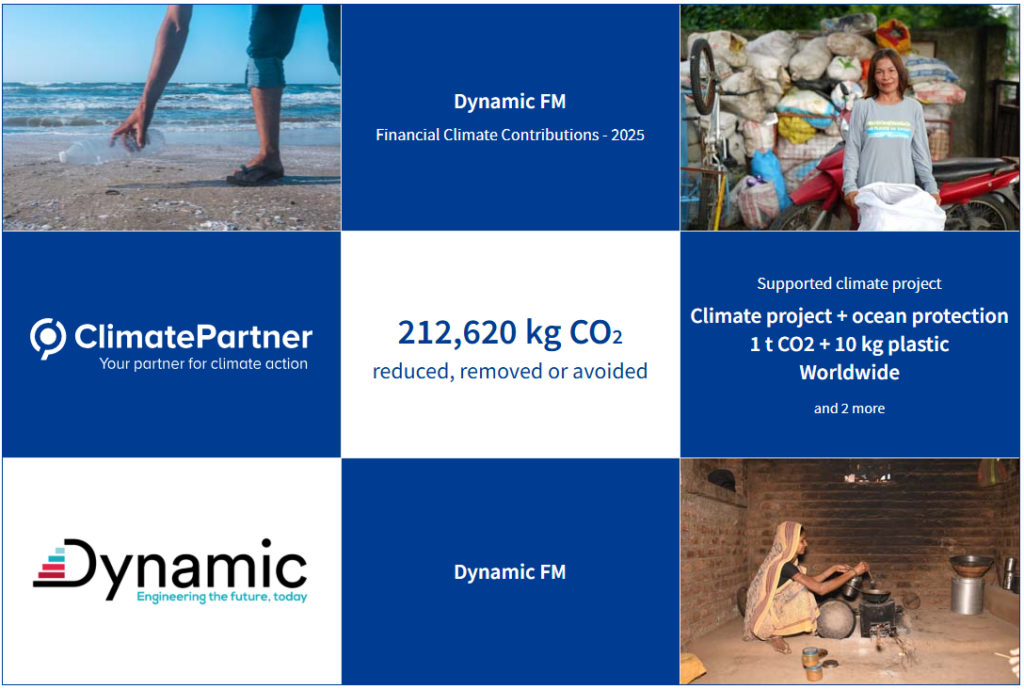
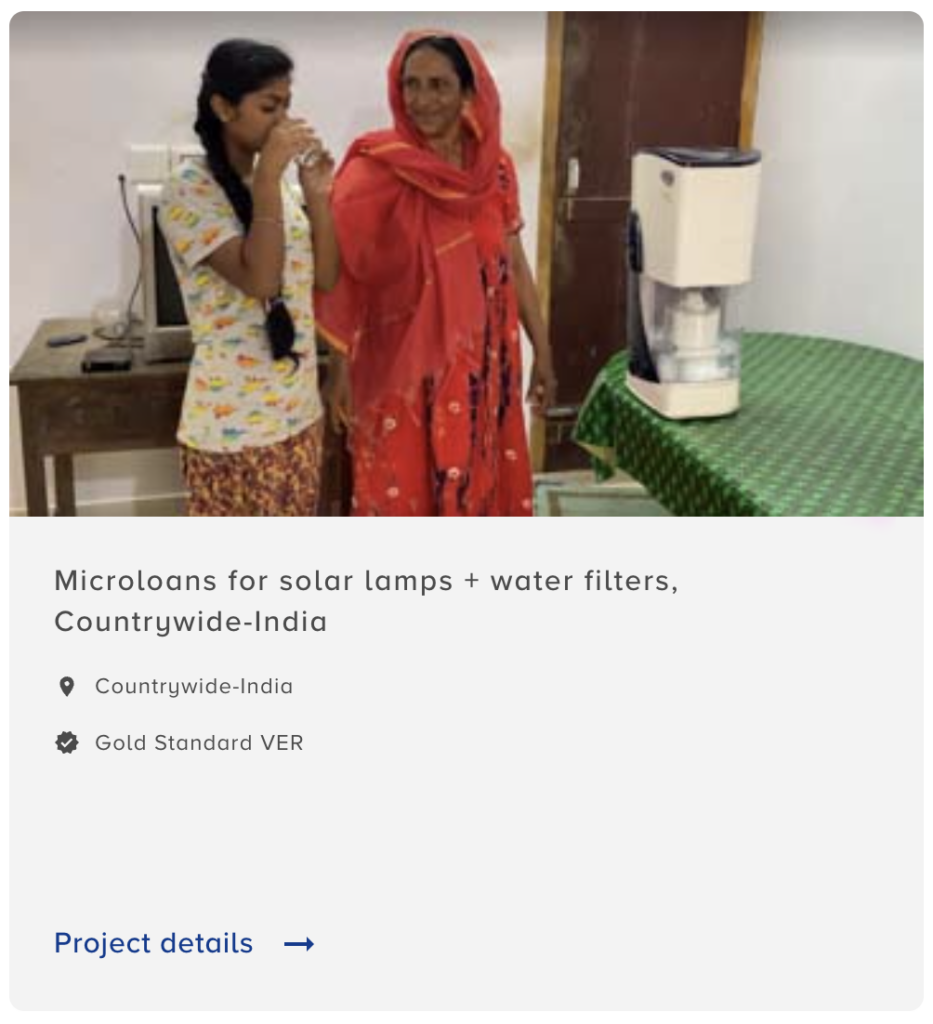
Dynamic FM financially contributes to certified climate projects every year after calculating our emissions. This contribution is intended to accelerate collective efforts towards achieving global net-zero emissions and supports the United Nations Sustainable Development Goals. Supported projects undergo regular audits by independent third parties to ensure transparency and accountability.
We have been offsetting our emissions since 2020, simultaneously supporting various climate projects both in the UK and abroad. You can view our full history of climate action by clicking on this link, or on the image below.
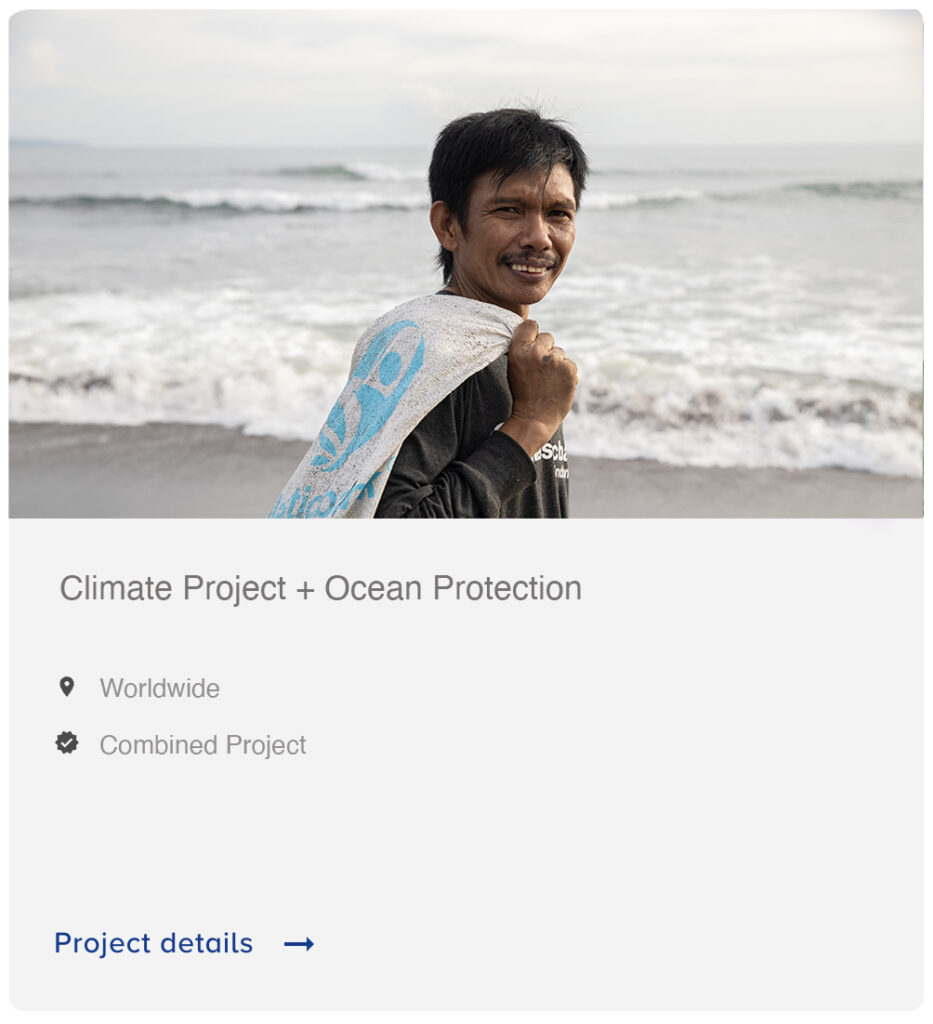
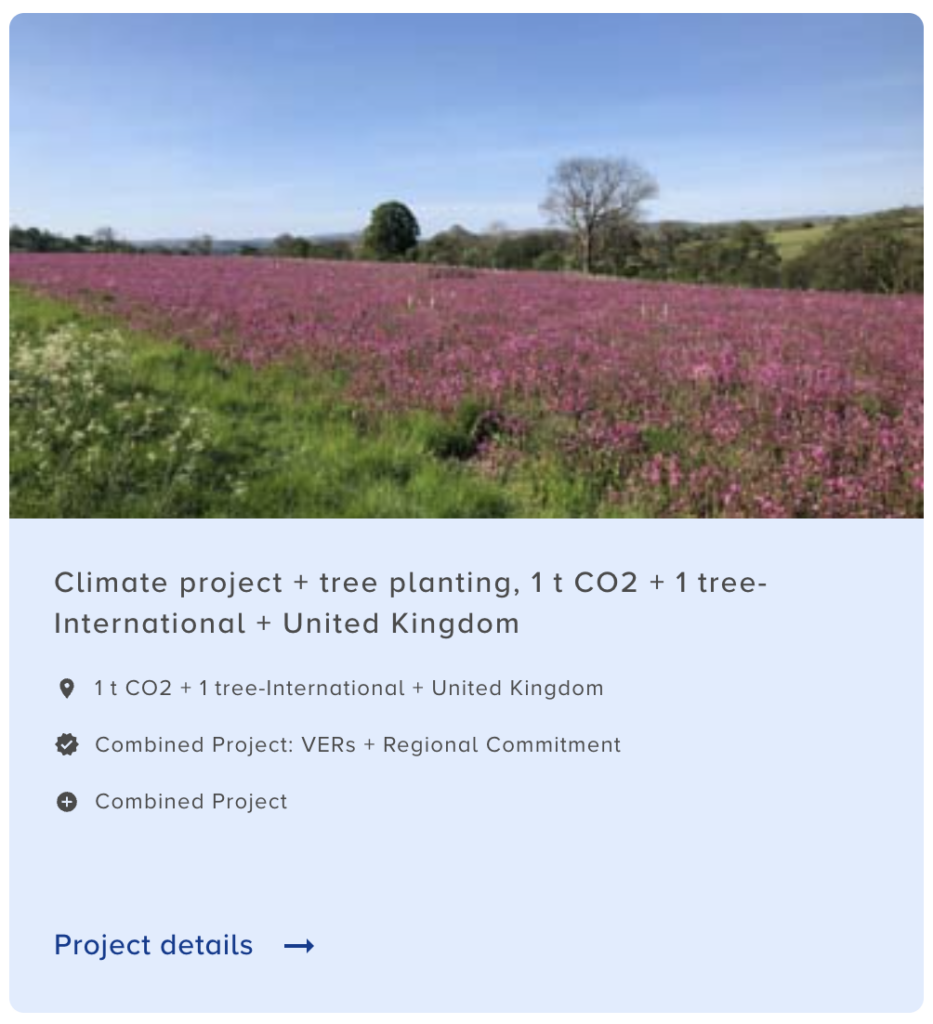
PROJECTS SUPPORTED IN 2025
Step 5: Transparency & Collaboration
An essential part of a Dynamic’s climate action journey is to make our ambition and achievements visible:
- to our clients
- to our partners
- to the general public
We commit to working continually with independent climate auditors and to consistently implement new measures to improve our sustainability.
By staying accountable and working together to learn and implement new measures, we can stay on track to achieve Net Zero.